
Create an intelligent system that detects and classifies faults in embedded printed circuit boards (PCBs), helping streamline diagnostics and reduce downtime. Ideal for educational settings, service centers, and repair training
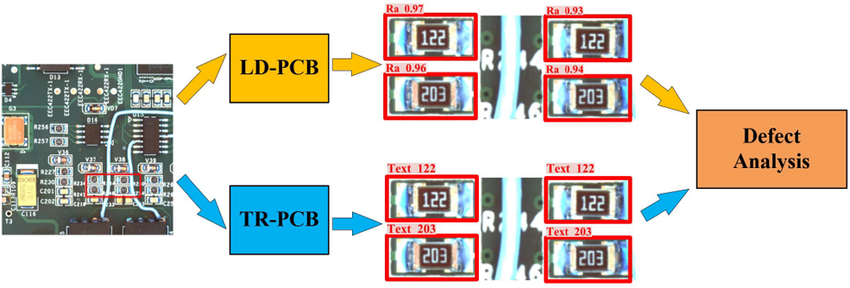
🧩 Core Objectives
Automate fault identification in PCB hardware
Classify faults (open circuit, short circuit, component failure, trace damage)
Guide users with actionable diagnostics via display or app
Simulate real-world testing environments with safe input/output interfaces
🔧 Key Components
Component Function
Microcontroller (e.g. STM32 / Arduino) Central logic unit
ADC (Analog-to-Digital Converter) Signal acquisition and comparison
Test probes or jig Interfaces with the PCB under test
LCD / OLED Display Shows fault details
Wi-Fi / USB Interface Optional for data logging or remote diagnostics
Buzzer / LED Indicators Alerts for fault classification
Multiplexer Sequential channel testing across pins or nets
🛠️ Detection Techniques
Voltage Drop Analysis: Compare expected vs. measured voltage at key nodes
Continuity Testing: Detect open circuits between designated pads
Capacitive/Inductive Response: Diagnose passive component degradation
Signal Fingerprinting: Use stored reference patterns for comparison
Thermal Monitoring (Optional): Identify hotspots due to overcurrent
🔁 Workflow Diagram
graph TD
A[Insert PCB] –> B[Test Probe Interface]
B –> C[ADC & Sensor Readings]
C –> D[Microcontroller Analysis]
D –> E[Fault Classification]
E –> F[Display Results]
E –> G[Alert System]
🎯 Extra Features to Impress
📱 Mobile app to log and share diagnostics
🧠 AI-based fault prediction (start simple with thresholds)