
Project Title: Smart Plant Watering System – Arduino-Based Simulation & Build:
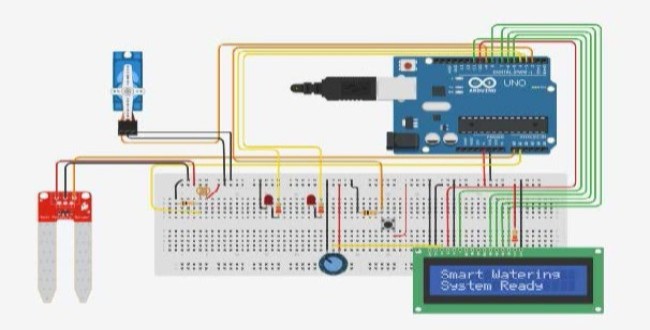
This project showcases the design, simulation, and operation of a Smart Plant Watering System using the Arduino Uno microcontroller. Built and tested in Tinkercad, it’s a hands-on demonstration of how embedded systems can streamline plant care through intelligent automation and user-controlled flexibility.
Project Overview:
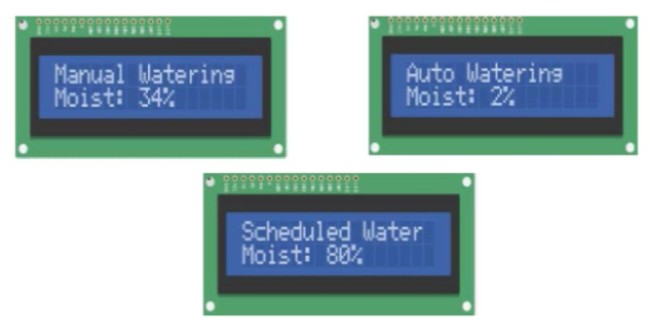
The system automates plant watering through three distinct operating modes:
1. Automatic Mode: Waters plants based on soil moisture and light intensity readings
2. Manual Override Mode: Allows users to initiate watering via a push-button
3. Scheduled Mode: Executes watering at timed intervals, capped at 10 minutes
This multifaceted approach combines sensor intelligence with real-time decision-making to create a reliable and adaptable irrigation assistant.
Core Components & Features:
• Arduino Uno: Central control unit managing logic and sensor inputs
• Soil Moisture Sensor & Light Sensor: Monitor environmental conditions
• Actuators (e.g., pump/valve): Trigger water flow based on system decisions
• Push Button: Enables manual watering override
• 16×2 LCD Display: Provides live feedback on soil moisture and light levels
• Status LEDs: Indicate current watering mode and activity
• Timer Logic: Ensures controlled watering duration in scheduled mode
• Interrupt Handling: Prioritizes user inputs and real-time sensor triggers
Simulation & Testing:
• Constructed and tested inside Tinkercad, showcasing virtual prototyping efficiency
• All modes were validated with sensor simulations and visual feedback
• Timing logic and hardware interrupts were fine-tuned for responsiveness and safety
• Clear documentation and tutorial included to explain setup, coding, and concepts
Educational Value:
This system offers hands-on experience in:
• Embedded system design
• Sensor interfacing and actuator control
• Interrupt-driven programming
• User interface integration
• System timing and reliability engineering
A compelling example of how everyday tasks—like watering plants—can be transformed through smart electronics and user-centric design.